Search
SEARCH WHAT YOU WANT
The advanced wound care market continues to move toward more specialized dressing structures, with silicone-coated foam becoming an increasingly important area of material development.
Recent industry activity highlights this direction. Freudenberg Performance Materials is preparing to showcase its Tacnera® technology for silicone-coated foam dressings together with Foshan United Medical Technologies at WUWHS 2026 in Kuala Lumpur. The technology combines polyurethane foam with engineered silicone coating structures for advanced wound care applications.
This development reflects a broader industry focus on balancing absorbency, secure fixation, flexibility and gentle wound contact.
Traditional foam dressings and silicone foam dressings each have different performance characteristics. PU foam is widely valued for its softness, flexibility and absorbency, while silicone-based contact layers can provide a gentler interface with fragile wound areas.
The challenge is to combine these properties into a dressing structure that can manage exudate while also providing secure fixation and comfortable dressing changes.
New silicone-coated foam technologies are being developed specifically around this balance. Freudenberg's Tacnera® technology, for example, combines PU foam, a proprietary coating structure and silicone gel, with different silicone properties used for fixation and wound contact.
The evolution from standard foam dressing to silicone-coated foam dressing is also creating new opportunities for material suppliers.
A silicone coated jumbo roll can provide a flexible starting material for manufacturers developing different dressing sizes and formats. Depending on the product design, the foam can be combined with film, silicone coating, adhesive layers or other functional components.
For OEM and ODM manufacturers, this material format can support the development of:
Silicone Foam Dressing
Silicone Foam Dressing without Border
Silicone Foam Dressing with Border
Silicone-Coated Foam Wound Dressing
PU Foam Dressing with Silicone Contact Layer
These formats can be further customized according to thickness, dimensions, absorbency, coating structure and final application.
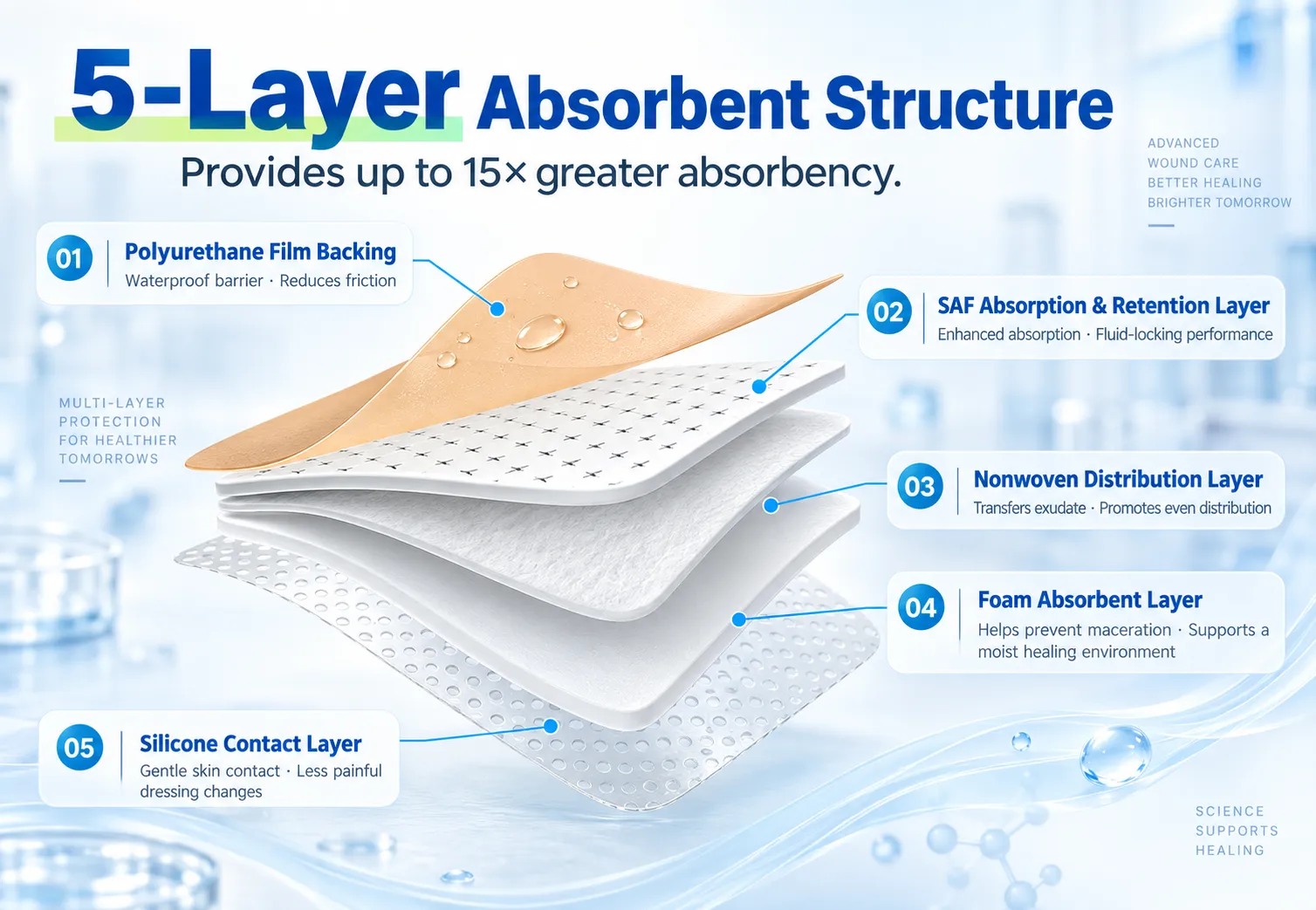
PU foam remains an important structural material in many advanced foam dressing designs.
Its porous structure can support fluid absorption, while its softness and flexibility allow the dressing to conform to different body contours.
Recent research and product development also show continued interest in multilayer and silicone-polyurethane foam structures. A 2026 Journal of Wound Care study investigated an advanced multilayer foam dressing combining silicone, polyurethane foam and superabsorbent particles for exudate management.
This suggests that future foam dressing development may increasingly focus on combining several functional layers rather than relying on a single material.
One of the key considerations in silicone foam dressing development is the interaction between the dressing and sensitive wound tissue.
Freudenberg's recently introduced Tacnera® technology uses different silicone characteristics within the dressing structure, aiming to provide stronger fixation at the border while maintaining a gentler wound-contact area. Its wave-pattern coating is also designed to improve flexibility, adaptability and exudate handling.
For manufacturers, this type of material engineering provides new possibilities for developing advanced products for delicate or hard-to-manage wound care applications.
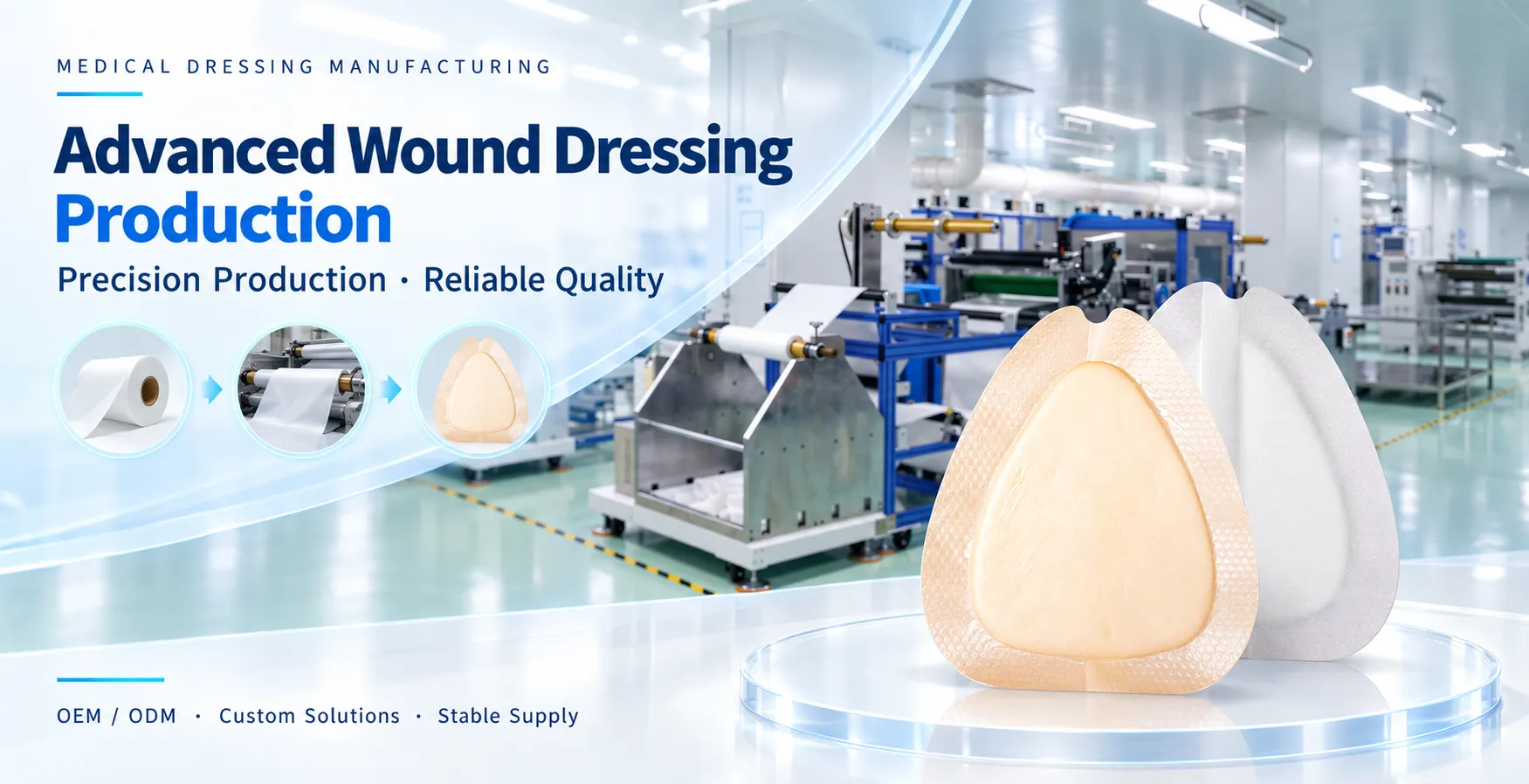
Modern wound dressing materials are no longer limited to a simple foam layer.
Depending on the intended application, a dressing may combine PU foam, silicone coating, adhesive layers and waterproof or breathable films.
This creates several material opportunities for jumbo roll manufacturers and medical dressing converters, including:
Factory Price Silicone Coated Jumbo Roll
Factory Price PU Film Jumbo Roll
Factory Wholesale Medical PU Foam Jumbo Roll
Factory Wholesale Medical PU Foam with Films Jumbo Roll
These roll materials can be further processed into customized wound dressing products for hospitals, home care, nursing facilities and medical distributors.
As advanced wound care products become more specialized, customization is becoming increasingly relevant to medical brands and distributors.
Different markets may require different dressing sizes, foam thicknesses, border structures, adhesive systems and film configurations. A flexible jumbo roll material platform allows manufacturers to develop these variations while maintaining consistent material specifications.
For buyers searching for a Silicone Foam Dressing Manufacturer, PU Foam Dressing Material Manufacturer, Medical Foam Roll Supplier or OEM partner, customized roll materials can provide a practical starting point for developing private label and contract-manufactured products.
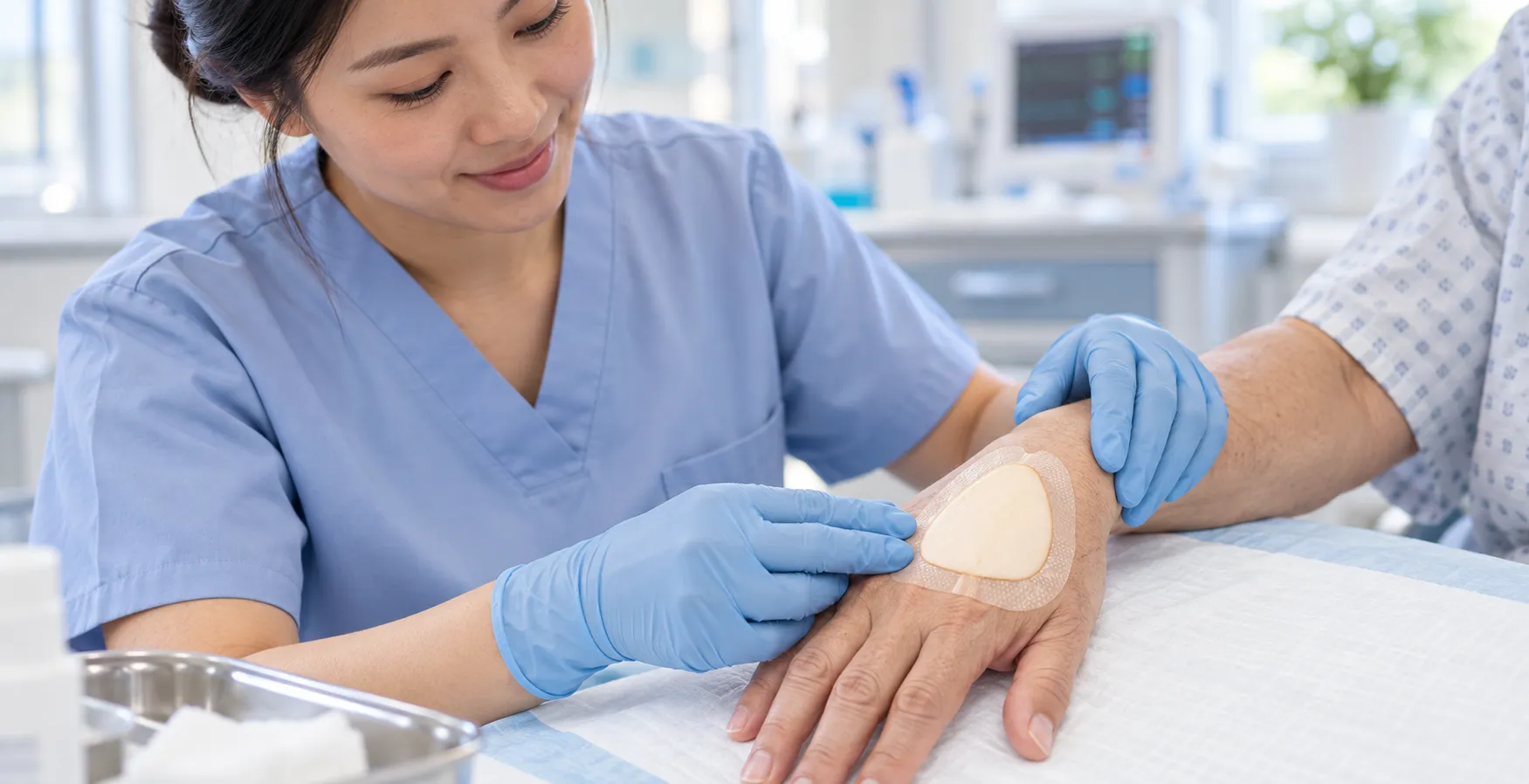
The development of silicone-coated foam demonstrates how advanced wound care is moving toward multifunctional material structures.
Instead of focusing only on absorbency, modern foam dressing development increasingly considers fixation, flexibility, moisture management, skin protection and dressing-change comfort together.
From silicone coated jumbo roll and medical PU foam to PU foam with film and silicone-coated structures, these material platforms can support the development of new generations of advanced wound care products.
For medical dressing manufacturers and brands, the combination of customized foam materials and silicone coating technology offers new possibilities for differentiated product development, OEM production and private label wound care products.
Email: medical@southvo.com
The advanced wound care market continues to move toward more specialized dressing structures, with silicone-coated foam becoming an increasingly important area of material development.
Recent industry activity highlights this direction. Freudenberg Performance Materials is preparing to showcase its Tacnera® technology for silicone-coated foam dressings together with Foshan United Medical Technologies at WUWHS 2026 in Kuala Lumpur. The technology combines polyurethane foam with engineered silicone coating structures for advanced wound care applications.
This development reflects a broader industry focus on balancing absorbency, secure fixation, flexibility and gentle wound contact.
Traditional foam dressings and silicone foam dressings each have different performance characteristics. PU foam is widely valued for its softness, flexibility and absorbency, while silicone-based contact layers can provide a gentler interface with fragile wound areas.
The challenge is to combine these properties into a dressing structure that can manage exudate while also providing secure fixation and comfortable dressing changes.
New silicone-coated foam technologies are being developed specifically around this balance. Freudenberg's Tacnera® technology, for example, combines PU foam, a proprietary coating structure and silicone gel, with different silicone properties used for fixation and wound contact.
The evolution from standard foam dressing to silicone-coated foam dressing is also creating new opportunities for material suppliers.
A silicone coated jumbo roll can provide a flexible starting material for manufacturers developing different dressing sizes and formats. Depending on the product design, the foam can be combined with film, silicone coating, adhesive layers or other functional components.
For OEM and ODM manufacturers, this material format can support the development of:
Silicone Foam Dressing
Silicone Foam Dressing without Border
Silicone Foam Dressing with Border
Silicone-Coated Foam Wound Dressing
PU Foam Dressing with Silicone Contact Layer
These formats can be further customized according to thickness, dimensions, absorbency, coating structure and final application.
PU foam remains an important structural material in many advanced foam dressing designs.
Its porous structure can support fluid absorption, while its softness and flexibility allow the dressing to conform to different body contours.
Recent research and product development also show continued interest in multilayer and silicone-polyurethane foam structures. A 2026 Journal of Wound Care study investigated an advanced multilayer foam dressing combining silicone, polyurethane foam and superabsorbent particles for exudate management.
This suggests that future foam dressing development may increasingly focus on combining several functional layers rather than relying on a single material.
One of the key considerations in silicone foam dressing development is the interaction between the dressing and sensitive wound tissue.
Freudenberg's recently introduced Tacnera® technology uses different silicone characteristics within the dressing structure, aiming to provide stronger fixation at the border while maintaining a gentler wound-contact area. Its wave-pattern coating is also designed to improve flexibility, adaptability and exudate handling.
For manufacturers, this type of material engineering provides new possibilities for developing advanced products for delicate or hard-to-manage wound care applications.
Modern wound dressing materials are no longer limited to a simple foam layer.
Depending on the intended application, a dressing may combine PU foam, silicone coating, adhesive layers and waterproof or breathable films.
This creates several material opportunities for jumbo roll manufacturers and medical dressing converters, including:
Factory Price Silicone Coated Jumbo Roll
Factory Price PU Film Jumbo Roll
Factory Wholesale Medical PU Foam Jumbo Roll
Factory Wholesale Medical PU Foam with Films Jumbo Roll
These roll materials can be further processed into customized wound dressing products for hospitals, home care, nursing facilities and medical distributors.
As advanced wound care products become more specialized, customization is becoming increasingly relevant to medical brands and distributors.
Different markets may require different dressing sizes, foam thicknesses, border structures, adhesive systems and film configurations. A flexible jumbo roll material platform allows manufacturers to develop these variations while maintaining consistent material specifications.
For buyers searching for a Silicone Foam Dressing Manufacturer, PU Foam Dressing Material Manufacturer, Medical Foam Roll Supplier or OEM partner, customized roll materials can provide a practical starting point for developing private label and contract-manufactured products.
The development of silicone-coated foam demonstrates how advanced wound care is moving toward multifunctional material structures.
Instead of focusing only on absorbency, modern foam dressing development increasingly considers fixation, flexibility, moisture management, skin protection and dressing-change comfort together.
From silicone coated jumbo roll and medical PU foam to PU foam with film and silicone-coated structures, these material platforms can support the development of new generations of advanced wound care products.
For medical dressing manufacturers and brands, the combination of customized foam materials and silicone coating technology offers new possibilities for differentiated product development, OEM production and private label wound care products.
Email: medical@southvo.com
Search
Category
Recent Posts